TIER: E+ :: ALGORITHM_FOODENTROPY_INDEX: 0.00084OBSERVED_COUNT:
/// CURATION_LOG_ANALYSIS
Historical context for February 7, 2018: While this video was processing, the price of Bitcoin sat at $7,595. the most played track was DRAKE_-_GOD'S_PLAN.MP3.
SYSTEM_TRIVIA:Many believe technology always progresses linearly, but it often advances in bursts with periods of stagnation, driven by unexpected discoveries and societal shifts.
/// KERNEL_INTEGRITY_CHALLENGE
ENCRYPTION_LEVEL: STATUS: UNCLAIMED // BE_THE_FIRST
Video Analytics & Performance Report | ID: d9481ec8a2fc
Content Profile
UML Use Case Diagram Tutorial is a 13m 24s Science & Technology video published by Lucid Software on February 7, 2018. Classified as a Instructional Guide, the upload has accumulated 3,626,053 views and 65,713 likes to date.
Performance Metrics
| View Count | |
| Engagement Depth | |
| Virality Score |
System Verdict
System Verdict: Pass. This video is authenticated as a genuine media asset. Metrics validate its placement in the Science & Technology indexing category.
ESTABLISHING_CONNECTION...
DATA_NODE: Lucid Software
PUBLISHED2018-02-07
DURATION13m 24s
VIEWS3,626,053
ENGAGEMENT68,305 units
WE'VE UPDATED OUR VIDEO!
CLICK HERE: https://youtu.be/4emxjxonNRI
——
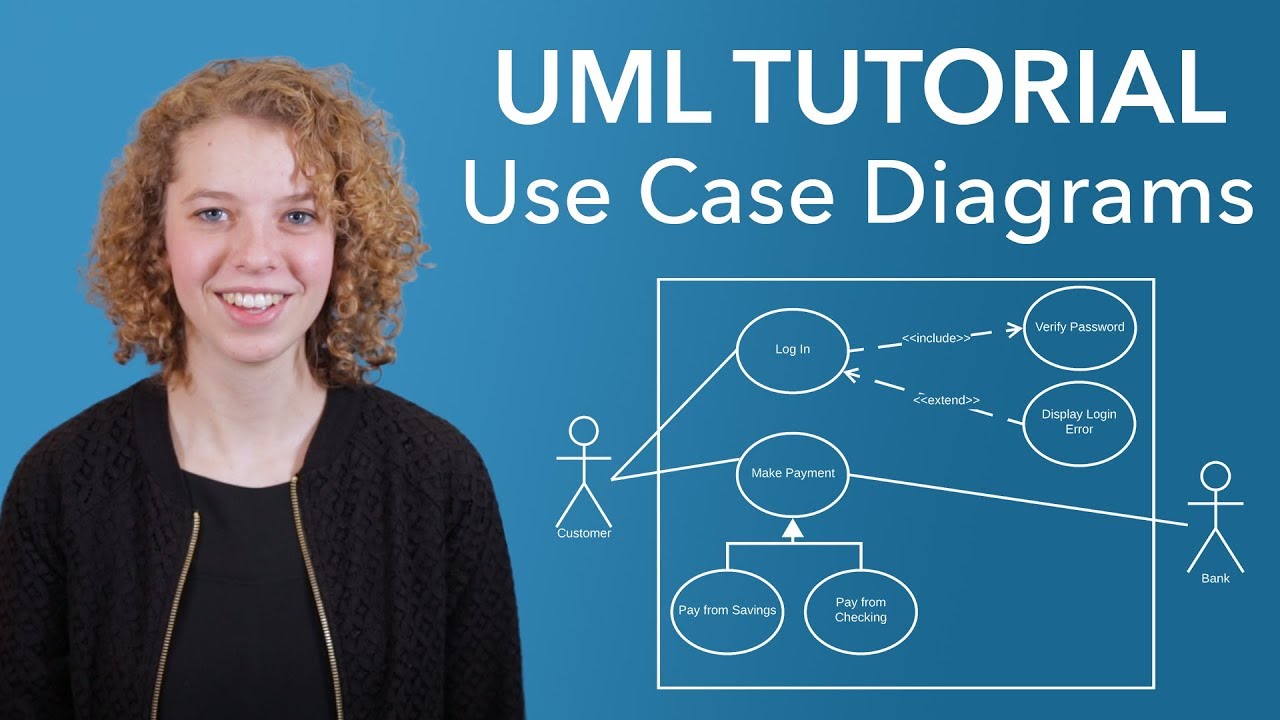
Learn how to make Use Case Diagrams in this tutorial. Both beginners and intermediate UML diagrammers will find all the necessary training and examples on systems, actors, use cases, and include and extend relationships.
UML Use Case Diagrams show a system or application; then they show the people, organizations, or other systems that interact with it; and finally, they show a basic flow of what the system or application does.
This tutorial explains the four main characteristics of Use Case Diagrams: systems, actors, use cases, and relationships.
A system is whatever you’re developing. It could be a website, a software component, a business process, an app, or any number of other things. You represent a system with a rectangle.
The next aspect of Use Case Diagrams are actors. An actor is going to be someone or something that uses our system to achieve a goal, and they're represented by a stick figure.
Use Cases are elements that really start to describe what the system does. They're depicted with an oval shape and they represent an action that accomplishes some sort of task within the system.
The final element in Use Case Diagrams are relationships, which show how actors and use cases interact with each other. There are different types of relationships (like association, include, extend, and generalization) that are represented by varying types of lines and arrows.
——
Learn more and sign up:
https://www.lucidchart.com
Follow us:
Facebook: https://www.facebook.com/lucidsoftware
Twitter: https://twitter.com/lucidsoftware
Instagram: https://www.instagram.com/lucidsoftware
LinkedIn: https://www.linkedin.com/company/lucidsoftware
CLICK HERE: https://youtu.be/4emxjxonNRI
——
Learn how to make Use Case Diagrams in this tutorial. Both beginners and intermediate UML diagrammers will find all the necessary training and examples on systems, actors, use cases, and include and extend relationships.
UML Use Case Diagrams show a system or application; then they show the people, organizations, or other systems that interact with it; and finally, they show a basic flow of what the system or application does.
This tutorial explains the four main characteristics of Use Case Diagrams: systems, actors, use cases, and relationships.
A system is whatever you’re developing. It could be a website, a software component, a business process, an app, or any number of other things. You represent a system with a rectangle.
The next aspect of Use Case Diagrams are actors. An actor is going to be someone or something that uses our system to achieve a goal, and they're represented by a stick figure.
Use Cases are elements that really start to describe what the system does. They're depicted with an oval shape and they represent an action that accomplishes some sort of task within the system.
The final element in Use Case Diagrams are relationships, which show how actors and use cases interact with each other. There are different types of relationships (like association, include, extend, and generalization) that are represented by varying types of lines and arrows.
——
Learn more and sign up:
https://www.lucidchart.com
Follow us:
Facebook: https://www.facebook.com/lucidsoftware
Twitter: https://twitter.com/lucidsoftware
Instagram: https://www.instagram.com/lucidsoftware
LinkedIn: https://www.linkedin.com/company/lucidsoftware
⚠ SIGNAL_INTERCEPTEDROOT
RECOMMENDS_NODE:[jhXNWlOxfw8]